



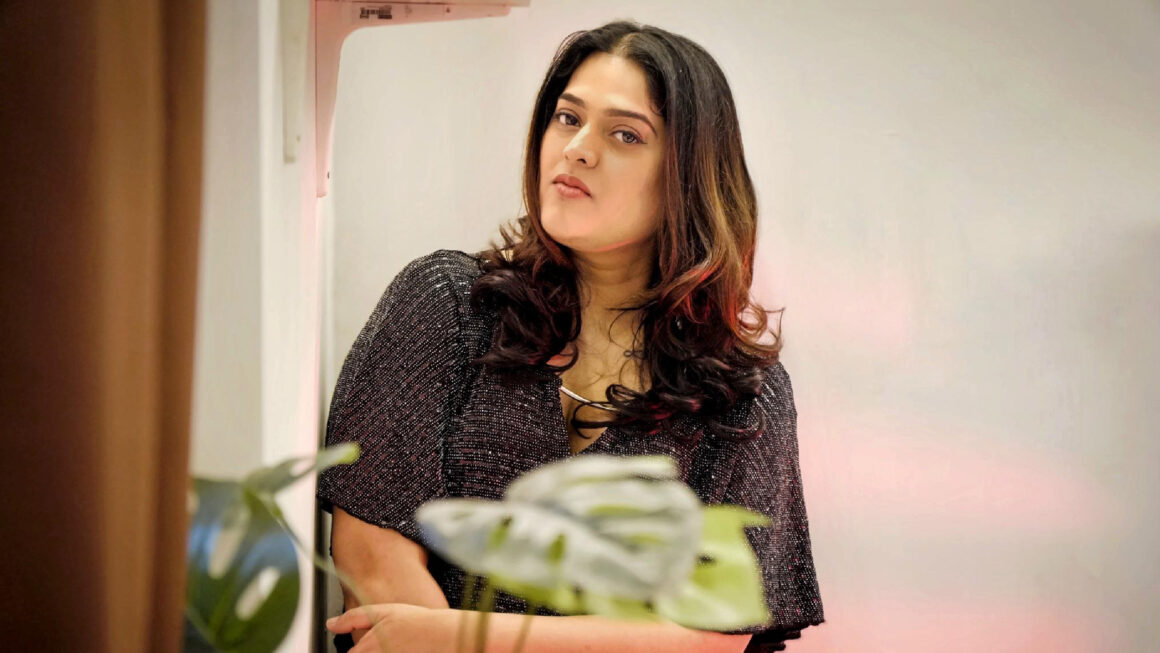
For singers with a classical background, the music industry often likes neat labels. Classical vocalist. Ghazal singer. Playback singer. Independent artist. Surabhi Dashputra’s career hasn’t followed that script.
Over the past decade, the Mumbai-based vocalist has built a body of work that moves between Hindustani classical music, devotional songs, ghazals and independent releases, while also working behind the scenes on film and television projects and running her own music academy. More recently, she stepped into contemporary Punjabi pop territory with Ludhiyane Waleya, a collaboration with composer Arjuna Harjai that introduced a different side of her artistry.
Ask Dashputra whether moving between these worlds requires a balancing act, however, and she seems unconvinced by the premise.
“I’ve always believed that strong classical training should expand your possibilities, not confine you to one space,” she says.
It’s a view shaped by years of training. A disciple of Padma Shri Suresh Wadkar, Surabhi Dashputra moved to Mumbai at the age of 16 to pursue music more seriously. The years that followed were built around the routines familiar to most classical musicians: long hours of riyaaz, attention to detail and the understanding that progress rarely arrives overnight.
Yet when she speaks about classical music today, Surabhi Dashputra talks less about tradition and more about what the training allows her to do.
“The biggest thing classical training taught me is respect for sur and breath control,” she says. “Even on a commercial track, I automatically pay attention to how a phrase flows, how a note lands and how emotion travels through a line.”
Those lessons surface in different ways depending on the music she is working on. Not every song, she points out, benefits from vocal flourishes or technical displays.
“Some tracks need restraint, softness or a more conversational texture. Sometimes the best thing a singer can do is hold back instead of showing everything they can do.”
For Surabhi Dashputra, that restraint is not the opposite of training. It’s one of its outcomes.
The conversation becomes particularly interesting when discussing listeners. At a time when songs often compete for attention in increasingly crowded digital spaces, it’s easy to assume audiences respond primarily to hooks, trends and immediacy. Dashputra sees things a little differently.
“People can feel when a voice carries emotion, control or depth,” she says. “Mood may bring people in, but nuance is often what creates longevity.”
That belief perhaps explains the variety of music she has chosen to pursue. Rather than approaching genres as boxes to tick, she treats them as different emotional spaces, each with its own language and demands.
“For me, versatility is not about proving that you can sing everything. It’s about making every style feel believable and emotionally honest.”
That philosophy was tested again on Ludhiyane Waleya. Built around an upbeat Punjabi pop sound, the track sits some distance away from the music many listeners might immediately associate with a classically trained vocalist.
“It pushed me slightly outside what people usually expect from my voice,” she says. “It felt playful, bold and performance-driven.”
What appealed to her was not simply the chance to try something different, but the opportunity to do so without losing her sense of identity.
“I wanted the song to carry my vocal identity.”
Away from recording sessions and performances, Surabhi Dashputra spends much of her time at ASM Academy, the music school she founded in Mumbai in 2016. Teaching has become a significant part of her professional life, offering a perspective that complements her work as a performer.
“You can’t ask students to practise sincerely if you’re not doing the same yourself.”
The relationship works both ways. While teaching reinforces discipline and fundamentals, it also encourages a closer examination of technique.
“Teaching keeps me grounded and performing keeps me instinctive.”
That combination of structure and curiosity appears to define where Surabhi Dashputra finds herself today. Alongside live performances and new releases, she is currently working on an EP with UK-based label Art Sense Records, exploring thumri through a contemporary sonic approach.
For an artist whose work continues to move between different musical traditions and formats, the project feels like a continuation of an approach she has followed for years.