



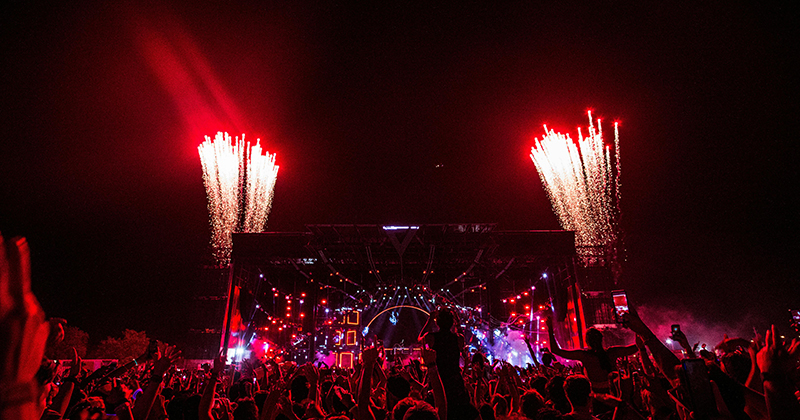
India’s live entertainment economy has entered a new phase of scale and visibility. In 2024, a mix of global tours, rising domestic stars and brand-led music IPs pushed the sector into mainstream conversation. What was once seen as a fragmented events market is now being viewed as a cultural and economic engine.

For Sponco CEO Subramanian Iyer, known widely as Subu, this shift represents both validation and a new challenge. With more than two decades in experiential entertainment and an acquisition by Believe in 2019, Iyer co-founded Sponco in 2023 with his long-time partner Warren to create more predictable commercial outcomes for both brands and organisers.
“Till a couple of years ago, the live music industry was not even recognised in formal reports,” he says. “Last year changed that completely. We are operating at a scale India has never seen.”
A Breakout Year That Reset Expectations
2024 was the clearest sign that India’s live business had arrived.
“We saw some of the largest international acts and IPs come to India, and for a stretch between August and November everything was selling,” Iyer recalls.
Coldplay’s five-show tour generated more than 200 crore. Punjabi star Karan Aujla proved that domestic artists can create demand at a scale that attracts both promoters and brands. Homegrown IPs such as McDowell’s Yaari Jam, Royal Stag Boombox and Nykaaland also saw meaningful expansion.
“In short, 2024 put the industry on the map. It became clear that India is ready for more, and that multiple players can operate beyond ticketing platforms,” he says.
2025 Continues the Energy, But With Realignment
The spillover into 2025 has been mixed. Promoters rushed to lock domestic headliners early, but the number of artists who can consistently sell tickets remains small.
“It has been an artist market. Their costs have reached levels that make profitability a challenge for promoters,” Iyer says.
International tours are facing similar pressures. Some have been unable to meet P and L expectations, leading to postponements or cancellations.
Ticketing performance has been uneven. “Large projects are doing well, but it is not consistent across the board. Consumers have too many options in key cities, and fatigue is real. Infrastructure challenges also limit the experience,” he adds.
Brand investments have dipped slightly, although sentiment remains cautiously optimistic.
“Our hope is that more organisers make money. That is the only way the momentum builds,” he notes.
Not Consolidation, But a Market Correction
There is conversation about consolidation, but Iyer believes it is too early to call it that.
“This is still a small industry. What we are really seeing is correction,” he says. “Promoters are realising that committing large guarantees when the numbers do not add up on day one is simply not sustainable.”
How Brands Are Assessing Music
Two sectors continue to dominate music partnerships:
• Alcohol brands
• BFSI brands
“The alco-bev sector has limited avenues to spend, so experiential makes the most sense for them. BFSI benefits from pre-sale windows and premium client experiences,” Iyer explains.
Other sectors are interested, but the cost-to-impact equation remains a barrier.
“They want to explore, but they find it expensive for the immediate results they expect,” he says. “To really grow, we need traditional and new-age advertisers to look at live entertainment the way they look at sport.”
ROI Remains a Long-Term Story
Live entertainment delivers cultural value before it delivers short-term financial results.
“These are long-term investments. Some parts are measurable but a large part is about building cultural relevance,” Iyer says. “We do not have many brands willing to take that kind of long-term bet yet.”
Measurement tools are still evolving. “The industry does not have a universally accepted way of evaluating perception, sales uplift or branding impact. At Sponco we are working on making this more scientific, but it will take time,” he adds.
What Influences Brand Decisions Today
Brands are gravitating towards recurring IPs and properties they can build over time.
“They want consistency. They want to stay with a project so that the partnership means something,” Iyer explains.
Key factors include:
• Brand fit
• Media valuation
• Rights around content and sales
• Organiser credibility
• The mix of other partner brands
“Credibility really matters now. Brands want to know who else is on the project before signing,” he notes.
The Partnerships That Set a Template
Iyer points to Budweiser, Nexa and Johnnie Walker’s long-term association with Lollapalooza India.
“They have been there since the beginning. They leverage it better each year, and they budget for it at the start of the year. That is a fundamental shift,” he says.
What the Industry Needs Now
Iyer outlines a set of structural priorities for the next phase.
1. Rationality in deals
“We need organisers to stay rational when making offers. Otherwise this becomes a high investment and low reward category.”
2. A shared industry narrative
“We need to start the year by figuring out how to sell the live business as media. Without that, consistent brand investment will remain limited.”
3. Clear coordination to avoid date clashes
“Clashes hurt the entire ecosystem. Coordination happens informally today, but we need a more structured system.”
4. Standardised proposals
“Every promoter sends a different proposal format. It is a large challenge. We are building an organiser focused tech solution to fix this.”
5. Stronger media partnerships
“Relying only on digital is not working. Organisers need to come together and secure media at scale by committing long term.”
6. More brands from more sectors
“Educating brands is important. Live music industry has to be seen as a long-term bet, not a campaign tactic.”
7. The scale question
“If we can offer scale, the music industry will grow the way digital media did. That is the biggest opportunity and the biggest challenge.”
India’s live entertainment market is expanding, but its next phase depends on structure, predictability and shared frameworks. For Iyer, the direction is clear.
“We arrived in 2024. Now we need to organise ourselves so that the next decade becomes a story of sustainable growth,” he says.