


A new research paper presented at the Design Research Society Conference 2026 in Edinburgh is challenging long-held assumptions about folk music and raising questions about how folk artists are recognised, credited and compensated.
Authored by Abhinav Agrawal, Mudit Chaturvedi and Gaurang Agrawal, the paper argues that existing definitions of folk music continue to overlook the creative agency of folk musicians, often portraying them as anonymous custodians of tradition rather than active creators shaping culture and responding to contemporary issues.
Titled Co-designing Culture: A Grounded Theory of Participatory Practice in Indian Folk Music, the study draws on interviews with 23 first-generation folk artists across 14 Indian states and is informed by more than a decade of fieldwork conducted through the Anahad Foundation, a non-profit organisation working with folk musicians across India.
The researchers argue that many widely accepted definitions of folk music, including those influenced by Western academic frameworks, place emphasis on collective ownership, oral transmission and anonymous creation. According to the paper, such characterisations often fail to account for individual authorship, artistic intent and the evolving nature of folk traditions.
“Having our own India-specific, practitioner-rooted definition lets us study folk music on its own terms, not through a borrowed lens,” said Abhinav Agrawal, lead author of the paper and a doctoral researcher in design at IIT.
The study proposes an alternative framework that views folk music as a living cultural practice shaped by artists and communities together. Rather than treating folk songs as static artefacts preserved from the past, the researchers describe them as evolving works that emerge through collaboration, performance and audience participation.
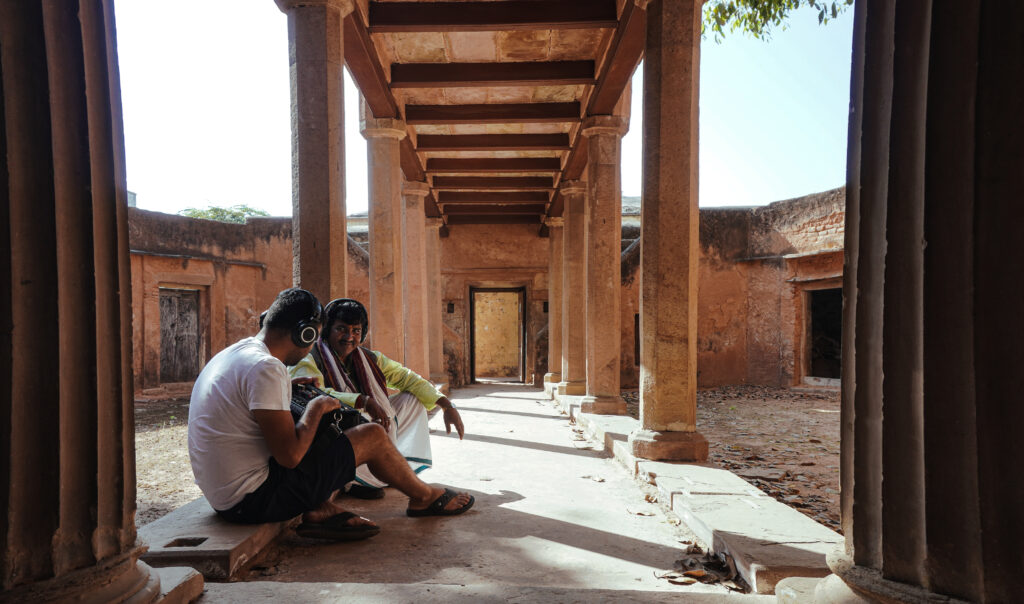
The findings are rooted in extensive engagement with folk musicians through the Anahad Foundation, which has worked with more than 10,000 artists over the past 13 years.
According to the researchers, many of the artists they encountered were using music to address contemporary social issues ranging from environmental concerns and gender rights to communal harmony and social reform.
“Like everyone else, we used to think of folk music as a traditional cultural resource, passed down orally from one generation to the next. But out in the field, while building what became the largest documentation of folk music in India, we didn’t meet tradition-bearers. We met changemakers,” said Agrawal.
Beyond cultural recognition, the paper also raises concerns about the impact of existing definitions on copyright and ownership. The authors argue that treating folk music as anonymous and collectively owned has historically made it easier for such works to be categorised as public domain material, often leaving creators without legal protection or financial participation in the value generated by their work.
“The word ‘folk’ has quietly become code for music from marginalised communities,” said Chaturvedi. “Moreover, because folk music is treated as a community resource, the law treats it as public domain. Which means the artists who actually write these songs, real people with names and families to feed, get no copyright, no royalty, no ownership. Their work belongs to everyone except them.”
The researchers hope their work will influence future discussions around cultural policy, funding and intellectual property, encouraging institutions to view folk traditions as active creative practices rather than endangered relics requiring preservation.
They also believe the shift could have practical implications for how folk musicians are supported, from copyright recognition and royalty participation to new funding opportunities and collaborative projects.
“It tells a Kajri singer in Bihar or a Baul in Bengal that she is no less a creator than any urban independent musician,” said Agrawal. “It opens the door to fair collaborations, and gives folk artists the same dignity, the same copyright protections, and the same creative authority that the rest of the music industry takes for granted.”
The paper was presented at the Design Research Society Conference in Edinburgh on June 10.
Research paper can be accessed here.