



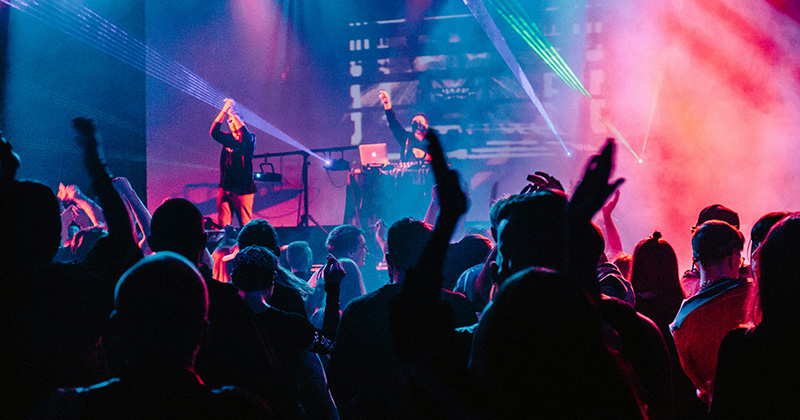
As India’s nightlife and hospitality economy hits its annual peak in December–January, the Indian Performing Right Society Ltd. (IPRS) says it has intensified action against venues and event organisers using music without the required public performance licences — warning that the biggest fallout is borne by songwriters, composers and publishers, not just party promoters.
The push follows a series of recent court interventions across multiple cities during the 2025 festive season, with IPRS positioning the orders as a reminder that annual background music licences do not automatically cover ticketed nights, DJ-led events, or special New Year celebrations, which require event-specific permissions.
“Recognition and respect for creative labour”
Playback singer and lyricist Priya Saraiya framed the issue as one of credit and basic fairness, not merely collections.
“Having spent many years as part of the music community, I see December as more than just a festive season… Live concerts, club shows, hotel performances and New Year events are at their busiest…,” Saraiya said, adding that when music is played at unlicensed events, “it is about recognition and respect for creative labour.”
She argued that licensing is the mechanism that keeps creators “part of the ecosystem where their work sustains,” warning that overlooking licensing during high-usage periods “weakens the link between creation and consumption” and ultimately harms the wider industry.
Court orders across cities underline “not a grey area”
IPRS CEO Rakesh Nigam said the year-end spike in live events and venue-led celebrations makes December–January one of the most commercially active periods for public performance and therefore a key earnings window for the “more than 20,000 authors, composers and publishers represented by IPRS”.
Nigam pointed to court orders secured across Mumbai, Delhi, Bengaluru and Kolkata as a “reaffirmation of how India’s music economy is expected to function,” arguing that non-compliance directly undermines creators’ economic rights.
He added: “Our objective is not to disrupt celebrations, but to ensure that they are conducted lawfully and responsibly… venues and promoters are protected from legal exposure, and creators are not excluded from the revenue generated by the widespread use of their work.”
What venues need to know: “Background licences don’t cover ticketed nights”
Legal counsel Ameet Dutta said courts have taken a consistent view: public performance of copyrighted musical and literary works without authorisation constitutes infringement under the Copyright Act, 1957, and enforcement tends to intensify during high-activity periods such as year-end.
“What is important for venues, promoters and event organisers to understand is that annual background or live performance licences do not automatically extend to ticketed events, DJ-led nights or special New Year celebrations,” Dutta said, adding that non-compliance can lead to injunctions and court-directed deposits.
He also emphasised that IPRS enforcement is “supported by documented repertoire verification, established licensing frameworks and repeated outreach efforts,” positioning legal action as a last step where infringement persists.
Fast-growing royalties, but physical venues still under-licensed
The crackdown comes against the backdrop of strong headline growth in India’s royalty collections. CISAC’s Global Collections Report 2025 pegs India’s creator revenues at €80.5 million in 2024 (around ₹725 crore), a sharp year-on-year jump, largely driven by digital.
IPRS, however, argues that live events and background music remain under-licensed relative to the scale of usage, a gap that becomes most visible when hotels, clubs and ticketed parties ramp up around Christmas and New Year.