


The Indian Performing Right Society (IPRS) has joined creators’ organisations and rights bodies from around the world in supporting the Paris Commitment, a new global declaration focused on protecting creator rights as artificial intelligence becomes increasingly embedded in the creative industries.
The declaration was adopted during the centenary General Assembly of the International Confederation of Societies of Authors and Composers (CISAC) in Paris, which brought together more than 450 creators, policymakers, collective management organisations and industry representatives to discuss the impact of AI on copyright, ownership and remuneration.
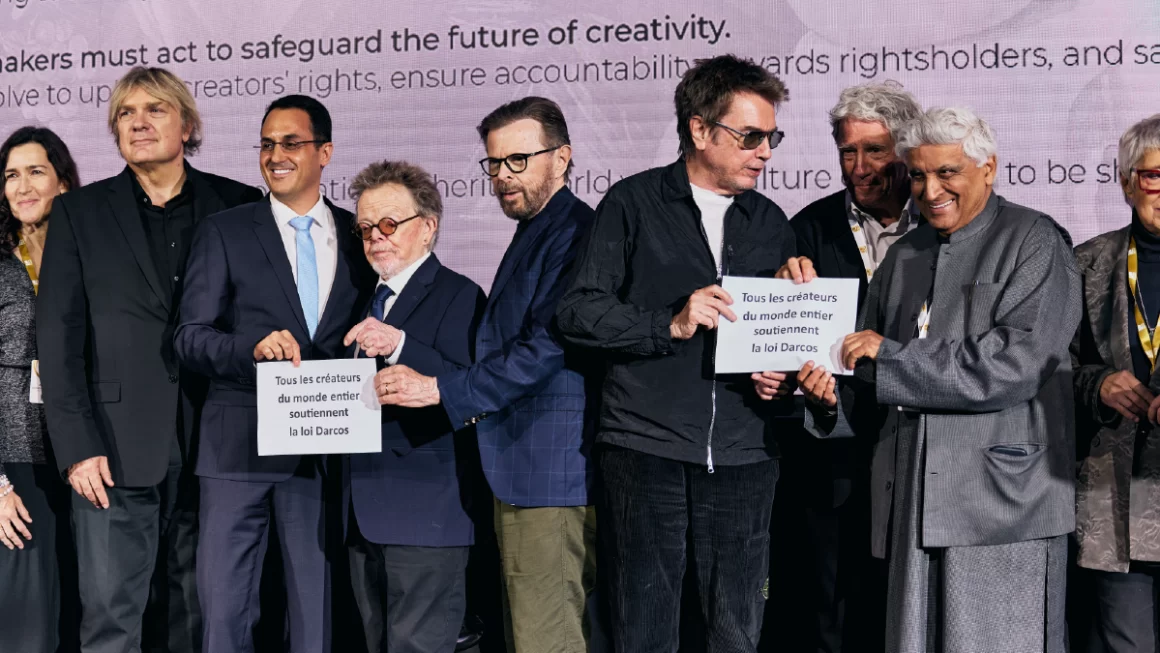
Representing India at the event were Javed Akhtar, Chairperson of IPRS; Rakesh Nigam, CEO of IPRS; Ameet Datta, Head of Legal at IPRS; and lyricist, screenwriter and IPRS board member Mayur Puri.
The Paris Commitment comes amid growing global debate over the use of copyrighted works in training generative AI systems. Creators and rights holders have increasingly called for greater transparency around how their works are being used, as well as clearer frameworks for consent, licensing and compensation.
Among the signatories were Javed Akhtar; CISAC President and ABBA co-founder Björn Ulvaeus; composer Jean-Michel Jarre; singer-songwriter Yvonne Chaka Chaka; songwriter and actor Paul Williams; composer Simon Franglen; and several other creators and rights advocates from around the world.
The declaration outlines four key priorities:
- Protecting human creativity and cultural diversity
- Ensuring transparency, licensing and fair remuneration in AI systems
- Strengthening collective management organisations
- Encouraging governments to safeguard creator rights and cultural expression
Speaking on the significance of the declaration, Javed Akhtar, Chairperson, IPRS, said:
“Creativity is one of the deepest expressions of our humanity. The Paris Commitment sends a united message from creators around the world: human creativity must continue to be valued, respected and protected. Technology can be a powerful enabler of progress, but it must not diminish the role of human imagination, lived experience, emotion and cultural identity. As AI evolves, we must ensure that creators remain visible, valued and fairly rewarded for their contributions.”
Rakesh Nigam, CEO, IPRS, added:
“The conversation around AI is no longer only about technology it is increasingly about rights, ownership, accountability and the future of creative livelihoods. As one of the world’s fastest-growing creative markets, India has an important role to play in shaping how innovation and creator rights evolve together. Transparency, consent and fair remuneration must be central to any framework governing the use of creative works in AI systems. Human creativity remains the foundation upon which every creative industry is built.”
The declaration arrives at a time when governments, courts and industry bodies across multiple markets are grappling with questions around AI training data, copyright licensing and creator compensation.
According to CISAC’s latest annual report, global creator collections reached a record €13.97 billion, highlighting the growing economic importance of copyright-based industries. The report also notes that digital revenues have increased by nearly 70% over the past decade as streaming and digital licensing continue to reshape the global creative economy.
India was identified among the markets playing an increasingly important role in discussions around AI, copyright reform, collective management and creator remuneration, alongside jurisdictions including the European Union, United Kingdom, United States, Canada, Japan, South Korea and Australia.
For the music industry, the Paris Commitment reflects a broader effort by creators’ organisations worldwide to ensure that emerging AI technologies develop within frameworks that recognise authorship, secure consent and provide fair compensation when copyrighted works are used.