The Quiet Rewiring of Indie Music Discovery in India
India’s independent music landscape is expanding quickly, with a growing volume of releases competing for attention each week. As discovery becomes harder to secure and less predictable to influence, creators are increasingly experimenting with new ways to understand how their music moves through streaming ecosystems. One development gaining momentum is the rise of artist-facing pitching tools that offer structured submissions, clearer review pathways, and early audience insights.
Globally, several streaming services have experimented with direct artist submissions. In India, adoption has been uneven, but recent activity on JioSaavn’s ArtistOne platform offers early signals of how transparency and access might reshape artist pathways if adopted more widely across the industry.
Signals from a growing submission economy
One of the clearest indicators of behavioural change is volume. Over the last three months, the number of song pitches submitted via JioSaavn ArtistOne has increased by 134.21 percent compared to the previous three-month period. While volume alone does not guarantee outcomes, it suggests that artists are increasingly willing to engage with structured pitching when access feels visible and intentional.
Since the launch of the JioSaavn ArtistOne app, emerging artists have also begun appearing in marquee and high-impact editorial playlists that were previously harder to enter. These include broad new-music and hit-discovery spaces, alongside category-led playlists spanning pop, indie and regional genres. Notably, after Hindi, Bhojpuri and Punjabi account for the highest number of pitches submitted through the platform, pointing to strong regional adoption alongside mainstream indie activity.
A closer look at ArtistOne’s early patterns
ArtistOne is still evolving, yet the data emerging from its users highlights shifts in how new artists navigate discovery. Singer Ishaan Nigam is among those exploring this workflow. After submitting two tracks through the platform, both songs appeared across multiple editorial playlists, resulting in a 149 percent increase in streams.
For Ishaan, the impact extended beyond numbers. The ability to track listener response immediately after release offered a clearer sense of momentum and audience behaviour. For many independent artists, this kind of feedback has historically been delayed, fragmented, or unavailable altogether.
Stories from Hindi, Punjabi and Bhojpuri artists suggest a similar pattern beginning to take shape.
Yashashree Venkatesh and a new visibility curve
Hindi indie artist Yashashree Venkatesh saw a marked shift after she began submitting music through ArtistOne. Her monthly streams increased by 666 percent and her follower count rose from 845 to 16,932.
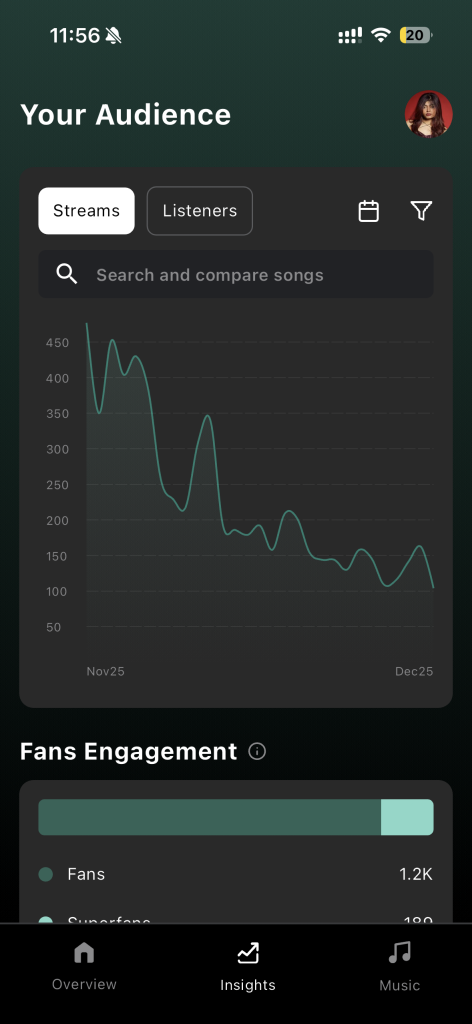
Her tracks were placed across curated playlists focused on new music, indie discovery and women-led pop. The placements themselves are not unusual in isolation, but the scale and speed of growth raise a broader question. Can transparent pitching systems help emerging artists consistently reach listeners beyond their immediate network?
Insane Muzik’s movement across niches
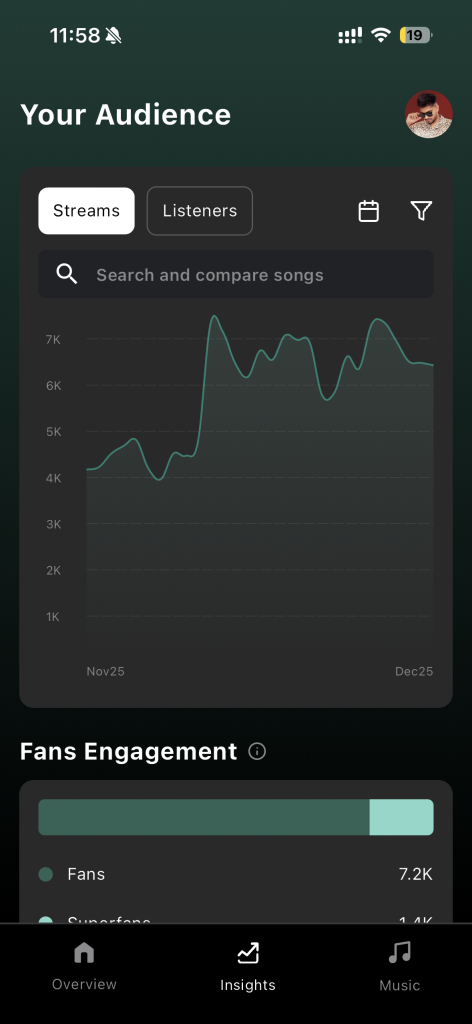
Punjabi composer Insane Muzik experienced one of the sharper increases among recent ArtistOne users. His streams grew by 6,189 percent and his follower count climbed from 515 to 51,907.
What stands out is not just growth, but movement. His songs travelled across playlists spanning indie discovery, devotional contexts and mood-based listening. This kind of cross-category circulation suggests that creator submissions may surface music that functions across multiple listening environments, rather than being locked into a single genre lane.
For editors and platforms, this raises an interesting consideration. When more artists enter through structured submissions, do traditional category boundaries begin to loosen?
Chulbul Lal Yadav and festival-linked discovery
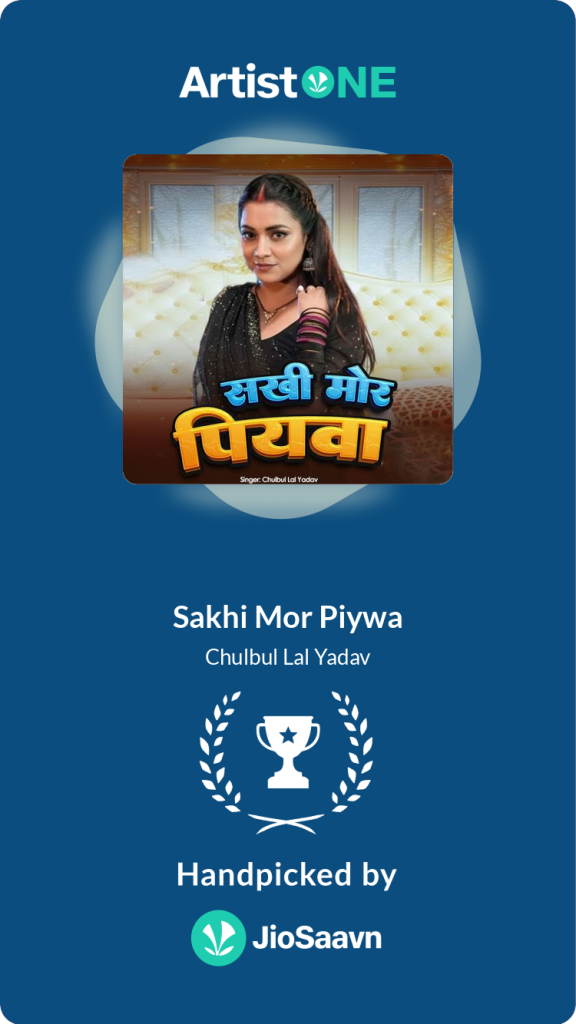
In the Bhojpuri market, where consumption often aligns closely with festival and devotional cycles, structured submissions appear to be influencing timing and visibility. Chulbul Lal Yadav has seen a 668 percent rise in streams since adopting the platform, with several of his releases finding traction during high-consumption periods.
This is notable because festival-driven genres have traditionally relied on distributor relationships and seasonal momentum rather than direct editorial communication. Pitching tools may be creating a new point of alignment between release strategy and platform curation for regional artists.
What this pattern suggests for indie music
These examples do not suggest that pitching tools alone determine success. However, they point to a broader shift in how early-stage discovery may unfold as structured submissions become more common.
A few themes emerge.
Access is becoming less opaque.
Artists can see how and when their submissions move through the system, reducing some of the uncertainty that has historically shaped discovery.
Feedback loops are tightening.
Real-time listener data allows creators to respond to early signals rather than waiting months to assess performance.
Regional and independent voices are scaling participation.
The rise in pitches from Hindi, Punjabi and Bhojpuri artists suggests that structured tools may be widening participation rather than narrowing it.
The larger question extends beyond any one platform. If more DSPs adopt transparent, creator-facing submission systems, could discovery become more standardised and equitable across the ecosystem? Or will these tools remain platform-specific advantages rather than industry-wide shifts?
For now, these case studies offer a snapshot of an ecosystem in transition, one where transparency, rather than pre-existing access, may increasingly influence who gets heard.