



India’s music industry ended 2025 in expansion mode. Live calendars were fuller than they have been in years. Multi-city tours scaled across formats. Brand-backed intellectual properties deepened their footprint. Streaming audiences continued to grow, and Indian artists maintained visibility both domestically and overseas.
By most surface indicators, this has been a strong year.
Yet beneath the growth narrative lies a more structural question. As the ecosystem expands, who is building sustainable careers within it, and on what terms? The issue is not demand. It is durability.
Across conversations with promoters, managers, producers, and artists, a consistent picture emerges. The Indian music business is no longer informal or experimental. It is becoming disciplined, data-led, and commercially structured. That maturity brings opportunity. It also brings pressure.
Live Music Is Bigger and More Calculated
The live sector illustrates this shift most clearly.

According to Shoven Shah, Founder and CEO of TribeVibe Entertainment, demand across formats has remained strong, with many shows averaging near 90 percent capacity. The expansion is visible not only in metros but increasingly across Tier 2 and Tier 3 markets.
But what defines 2025 is not just higher attendance. It is operational maturity.
Tours are now designed around data insights, route optimisation, and calibrated production spends. Multi-city runs allow for cost efficiencies and stronger predictability. Brand partnerships are integrated earlier in the planning cycle, aligning creative concepts with commercial structure from the outset.
The industry, in other words, is thinking less about one-off events and more about repeatable touring models.
This shift benefits those who can operate at scale with clarity. It also narrows the margin for improvisation.
Diversification Is No Longer Optional
For managers, sustainability now requires structured diversification.
Agam Walia, who co-leads the artist management division at TM Talent Management and manages Osho Jain, describes stability as a function of predictable income across multiple revenue lines. Live performance, digital content, brand partnerships, and intellectual property must operate together.

Brand partnerships have moved from supplementary income to foundational pillars. At the same time, rising production costs and tighter margins have made selectivity essential. Teams are making fewer decisions, but with greater strategic intent.
The ecosystem may be larger, but the filters are sharper. Scale, narrative clarity, and consistency increasingly determine access to opportunity.
Planning over multi-year horizons has become more complex. Speed is rewarded. Patience remains necessary.
Global Visibility, Limited Conversion
International touring adds another layer of complexity.

Dev Bhatia, COO at Big Bad Wolf, which also manages Indian Ocean, Prateek Kuhad among others, cautions against equating global visibility with profitability.
International touring involves high travel, production, and compliance costs. Only a limited number of Indian acts currently generate meaningful profit overseas. For most, international dates serve as long-term positioning rather than immediate revenue drivers.
Streaming metrics inform planning, but they do not automatically translate into ticket-buying audiences. Repeat listenership and local engagement are more reliable indicators of touring viability.
At the same time, the top tier benefits disproportionately from scale and leverage. Mid-level acts often operate with uneven cash flow, even when audience numbers appear healthy.
The pressure is both financial and psychological. Visibility is constant. Comparison is unavoidable.
Producers: Building Identity in a High-Output Market
For producers, sustainability is tied to authorship rather than volume.
Karan Kanchan describes 2025 as a year of consolidation and exploration. Professionally active across multiple projects, he still characterises the period as a building phase.

Long-term viability, he argues, depends on cultivating a recognisable sonic identity and a community around it. That thinking informs his producer-focused platform, Odd Forbid, which aims to create space and visibility for producer-led work.
The pace of releases has accelerated across the industry. However, he believes continuity and quality remain decisive in building trust. Output alone does not translate into longevity.
Structural reforms remain necessary. Improved crediting systems, clearer royalty frameworks, and stronger recognition of producers as creative stakeholders would allow careers to accumulate rather than reset with each project.
Autonomy Versus Acceleration
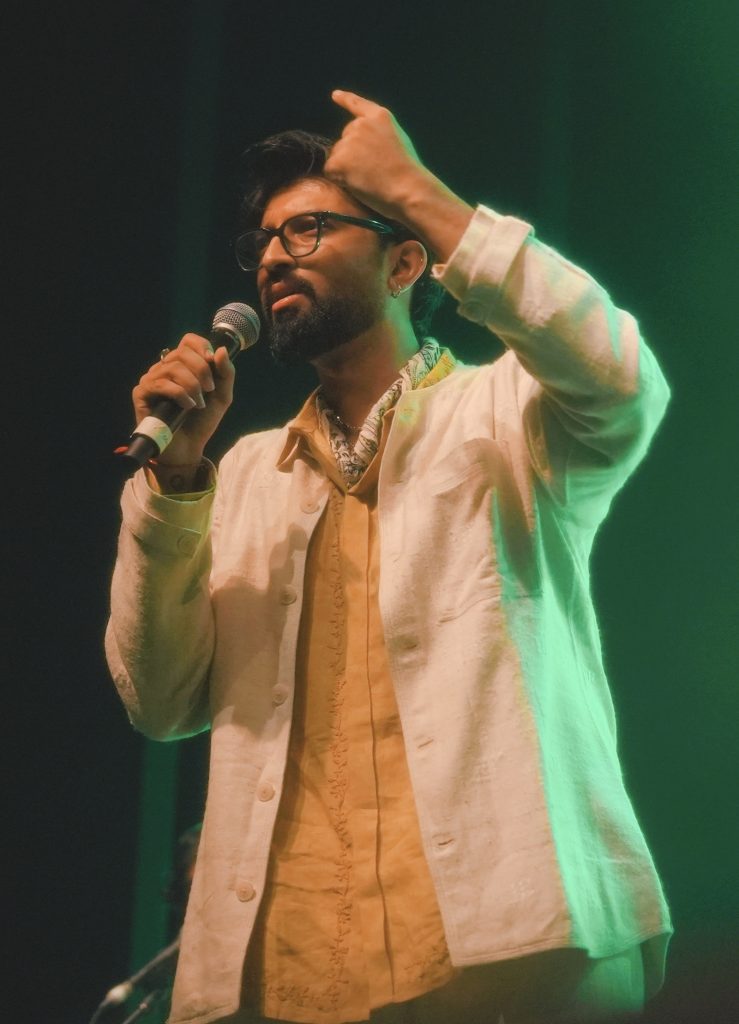
For independent artists, sustainability is often framed less in financial terms and more through creative autonomy.
Osho Jain has resisted the pressure to release frequently in response to short-form promotional cycles. He is wary of a content environment that compresses expression into seconds.
His approach has been selective. He releases when ready, not to satisfy algorithmic rhythm.
For Jain, sustainability is inseparable from freedom. Live performance remains central to his practice, both as expression and income. The relationship between artist and audience, built gradually and authentically, forms the foundation of stability.
In this model, durability is not driven by scale alone, but by alignment between creative intent and audience trust.
Longevity as Incremental Work
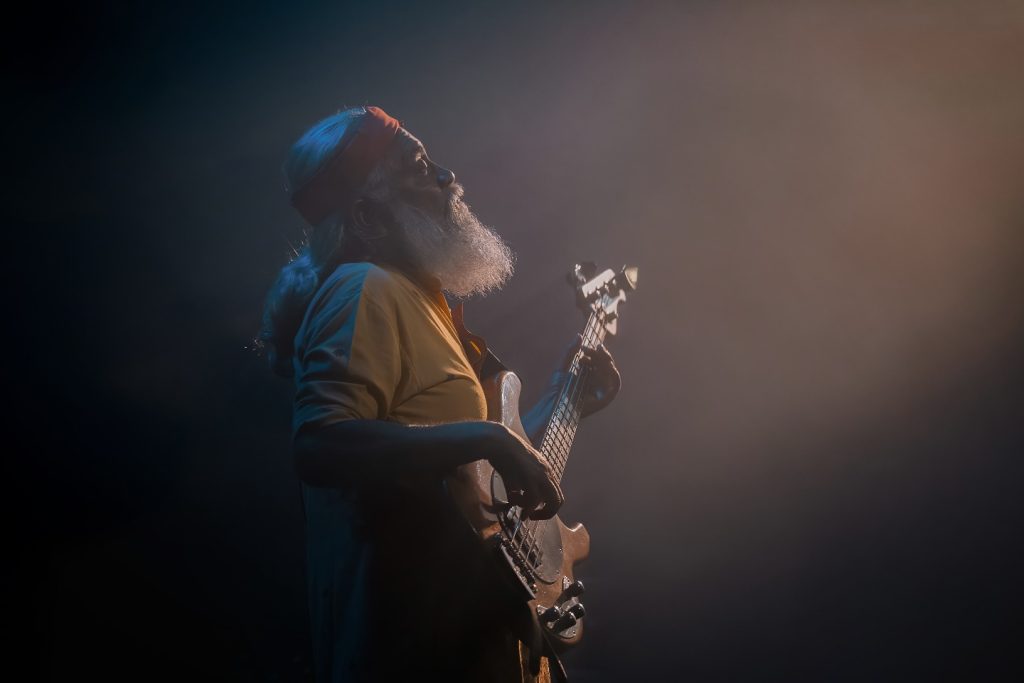
For Indian Ocean, 2025 marked sustained touring across formats and geographies. Bassist Rahul Ram describes steady demand built on decades of audience continuity.
Bands remain structurally more expensive to sustain than solo acts. Their viability depends on cohesion, clarity around rights, disciplined touring, and internal stability.
Longevity, in this context, is incremental rather than explosive. It is the outcome of repeated engagement rather than sudden scale.
A Market in Transition
Taken together, these perspectives suggest that India’s music industry is entering a phase of structural consolidation.
Promoters are operating with greater data precision. Managers are diversifying revenue streams. Producers are building institutional support. Independent artists are asserting creative control. Legacy bands rely on touring foundations built over decades.
The sustainability gap does not reflect declining demand. It reflects the widening distance between visibility and predictable economics.
As the industry matures, the cost of participation rises. Professional discipline becomes essential. Strategic clarity becomes non-negotiable.
Growth is evident. Durability requires infrastructure.
What 2026 Will Test
India’s music expansion is unlikely to slow in the near term. The critical question is whether supporting structures will evolve at the same pace.
Mid-scale touring networks, clearer rights frameworks, fairer royalty timelines, stronger crediting systems, and development capital will determine whether careers accumulate value over time or remain cyclical.
The next phase of growth will not be defined by audience size alone. It will be defined by whether the ecosystem can support careers measured in decades rather than moments.
The boom is established. The challenge now is sustainability.