





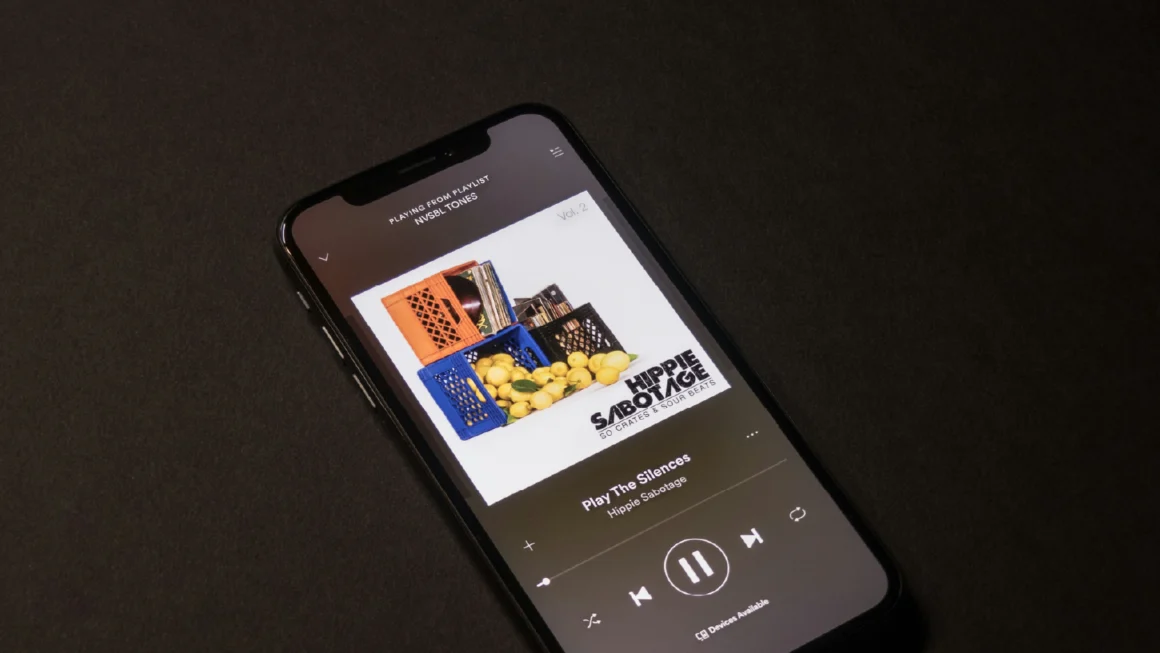
Tidal is the latest music platform to draw a firm line on fully AI-generated music. Following Bandcamp’s decision to prohibit music generated wholly or substantially by artificial intelligence in January 2026, Tidal has announced that it will reject new submissions and remove existing tracks that are entirely AI-generated from December 9.
The two decisions come from platforms with different roles in the music ecosystem. Bandcamp is a direct-to-fan platform used by independent artists to sell music and merchandise, while Tidal operates as a subscription-based streaming service. Their policies nevertheless mark two clear instances of platforms restricting fully or substantially AI-generated music.
Bandcamp was among the first major music platforms to introduce an outright restriction. Its January policy prohibits music and audio generated wholly or substantially by AI, as well as the use of AI to imitate other artists or styles.
Tidal had initially taken a different approach. Its AI policy, introduced in June 2026, allowed AI-generated music on the platform subject to certain conditions. It introduced labels for recordings identified as wholly AI-generated and made these tracks ineligible for royalty attribution. The platform also reserved the right to remove content associated with impersonation, deception and fraudulent activity.
The December update takes this further. Tidal will no longer accept wholly AI-generated recordings and will remove those already in its catalogue. Music created with AI assistance, where AI is not the sole source of the finished recording, will continue to be allowed.
Tidal says that 43% of the tracks delivered to its platform over the preceding 90 days were wholly AI-generated. Around 27 million such tracks were in its catalogue, accounting for 6.3% of its total library. It also reported that 96% of these recordings had received no streams during the previous three months.
The figures offer a snapshot of the volume of AI-generated music reaching streaming platforms, even when much of it attracts little listener activity. Tidal’s decision makes it the latest platform to take a position on what kind of music it wants to distribute.
How are other streaming platforms approaching AI music?
While Bandcamp and Tidal have opted for restrictions on wholly or substantially AI-generated music, other major streaming services are developing policies around transparency, content management and artist protection.
Spotify
Spotify announced a series of AI-related measures in September 2025, focusing on unauthorised vocal impersonation, music spam and greater transparency around AI use in music production.
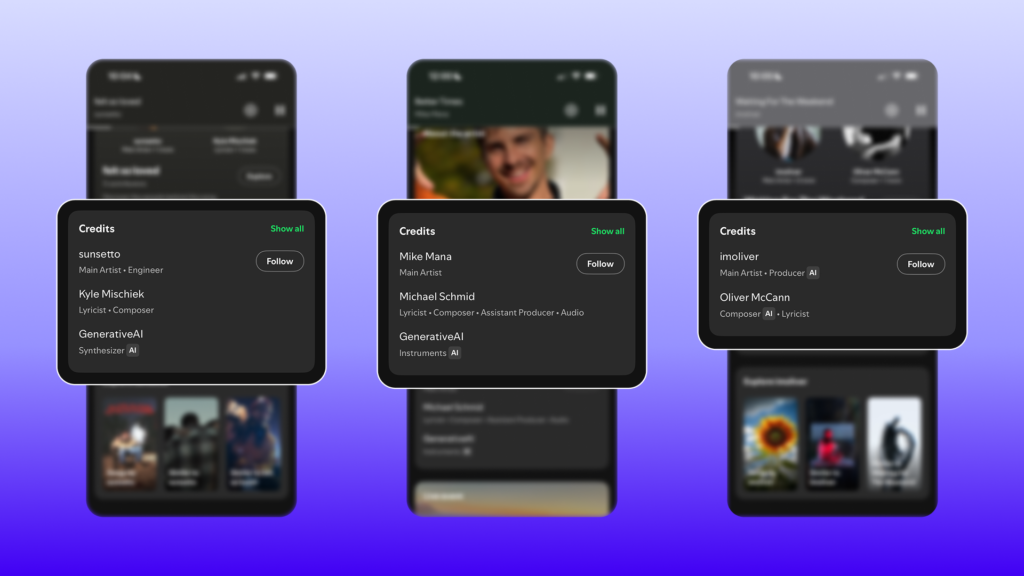
In April 2026, it began testing AI Credits, allowing artists, labels and distributors to disclose where AI has been used in a recording, including vocals, instrumentation and post-production. These details appear in the Song Credits section when supplied by the artist or their representatives. The disclosures are voluntary, so the absence of an AI Credit does not establish that a track was made without AI.
Spotify has also introduced AI Persona badges for artist profiles believed to represent AI-generated identities. These are different from credits on individual tracks: the badge identifies the artist persona rather than indicating how a particular song was made.
Its wider measures include a spam filter that targets mass uploads, duplicate tracks and attempts to manipulate recommendations. In an October 2026 update, Spotify said it had removed more than 50 million tracks associated with AI slop and spam from recommendations during the year, alongside removing additional spammy tracks from the platform for serious or repeated violations.
Spotify continues to allow music made using AI, including recordings where artists use the technology as part of their creative process. Its measures focus on disclosure, impersonation and platform manipulation rather than a ban on AI-generated music.
Apple Music
Apple Music introduced AI Transparency Tags in March 2026, giving labels and distributors a way to identify AI involvement in tracks, compositions, artwork and music videos.
The system allows this information to be included in the metadata supplied to Apple Music. Its approach places responsibility on labels and distributors to disclose AI use when delivering music to the platform, building transparency into the music supply chain rather than restricting AI-generated recordings.
YouTube Music
In October 2026, YouTube Music began rolling out labels for songs created primarily using generative AI. These appear on the player page and give listeners more information when AI has played a significant role in a track, such as generating its composition or vocals.
YouTube uses information from music partners alongside its own detection systems to identify these recordings. Its approach is centred on disclosure and helping listeners understand the content they are hearing.
The platforms are at different stages of developing their policies. Bandcamp and Tidal have taken the route of restricting wholly or substantially AI-generated music, while Spotify, Apple Music and YouTube Music are building disclosure systems and other safeguards around their catalogues.
Where does India stand?
Bandcamp has a particular place in India’s independent music ecosystem. For many independent artists, it offers a way to sell music, physical releases and merchandise directly to fans, set their own prices and build an audience beyond India.
Beyond Bandcamp, the conversation in India is taking shape through discussions between music labels and streaming platforms, particularly around royalty distribution, ownership and the use of existing music.
Saregama managing director Vikram Mehra addressed the issue during the company’s Q4 FY26 earnings call in May 2026. He said labels in India and globally were working with three leading international streaming platforms to ensure that purely AI-generated content did not receive a share of the royalty pool.
The proposal being discussed was to ensure that royalty distributions go towards genuine intellectual property and the people responsible for creating it. At the time, Mehra also said Saregama had not seen revenue leakage or a loss of market share due to AI-generated music.
His comments point to a discussion already taking place between Indian rights holders and streaming services. The question is how platforms should account for fully AI-generated tracks when royalties are distributed, and how they distinguish those recordings from music where artists have used AI as one of several production tools.
There is also a commercial side to the discussion.
During an investor meeting in November 2026, Mehra said that AI-generated music appeared to be gaining ground in terms of upload volumes rather than listener consumption. For catalogue owners, he identified unauthorised AI covers and remakes of existing songs as a more immediate concern.
Saregama has invested in technology to track these versions across streaming platforms, with the option of acquiring the rights or having the recordings taken down. The company is also speaking to AI creators about opportunities to own and distribute AI versions of songs from its catalogue.
This gives a clearer picture of how at least one major Indian music company is approaching the technology. Alongside protecting its existing rights, Saregama is exploring ways to participate in licensed AI-led uses of its catalogue.
For Indian artists, composers and producers, these discussions raise practical questions around consent, attribution and compensation. An AI-assisted production involving an artist’s own composition is different from a track generated entirely by AI. An AI cover that recreates an existing song or imitates a singer’s voice brings another set of rights and permissions into the picture.
There is no publicly established, detailed AI music policy from major Indian streaming services that matches the restrictions introduced by Bandcamp and Tidal.
An industry still working out its approach
The decisions by Bandcamp and Tidal mark two clear instances of platforms restricting fully or substantially AI-generated music, although their policies operate within different business models. Other services are focusing on disclosure, metadata and measures to protect artists and the integrity of their catalogues.
In India, the conversation is already extending beyond whether AI-generated music should be available on streaming services. Labels are considering how it should be accounted for in royalty pools, how existing catalogues can be protected and where licensed uses of AI could create new opportunities.
There is still no common approach across the industry. As more music is created and distributed using generative AI, the distinction between fully AI-generated and AI-assisted work, and the policies built around each, will become increasingly important.