


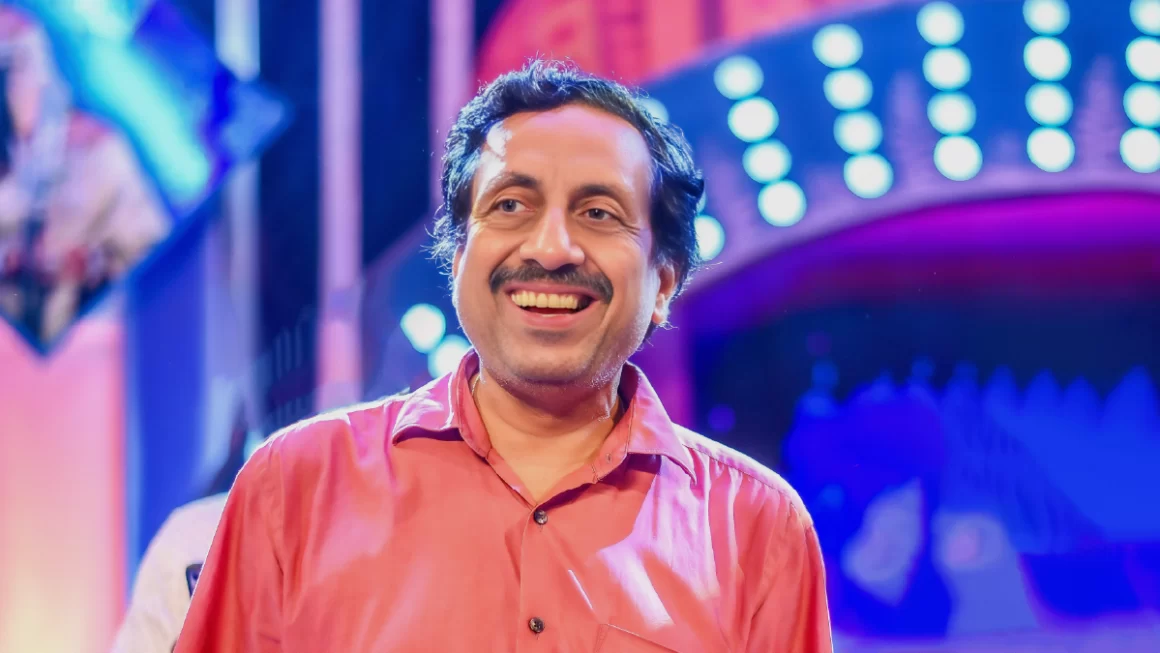
For Sitaram Agrawal, the expansion of Sarthak Music across music, television, radio, digital and film did not begin with a plan. It followed a pattern where each step responded to a gap in the market.
“When we started Sarthak Music in 1999, the idea was simple: we love music, Odisha loves music, let’s do this properly. But once you build a music library of hundreds or thousands of songs, you start asking yourself, why should I depend on someone else to distribute this? Why should someone else decide how my content reaches the audience?”
At the time, Odisha did not have the distribution networks or platform infrastructure seen in larger markets. That shaped how the company grew.
“Every time we hit a wall… we ended up building it ourselves. Music led to television, television led to digital, digital led back to television with Sidharth TV, and along the way we added FM radio and film production.”
The approach stayed consistent as the business expanded. “Own your content, own your audience relationship, and don’t wait for someone else to value what you already know is valuable.”
Success as a combination, not a single metric
Agrawal does not treat profitability, reach and cultural impact as separate tracks.
“If you chase only profitability without cultural relevance, the audience will see through you in a week, they are deeply connected to their roots. If you chase only cultural impact without the reach, you become a festival-stage act that nobody remembers on Monday. And if you have reach without a sustainable model, you will burn out within two years.”
Longevity is the measure he returns to. “For me, the real measure of success has always been longevity, are you still standing, still relevant, still creating after ten, twenty, forty years?”
That approach has carried the business through multiple format shifts. “We survived the transition from cassettes to CDs to TV to digital streaming because we never chased just one metric.”
Talent movement and the role of local ecosystems
Agrawal does not see talent leaving Odisha as a loss. “If an Odia artist or technician goes to Mumbai or the South and succeeds there, it proves something to the world about what Odisha can produce.”
The question, he says, is whether the local ecosystem gives them a reason to stay connected. “The real question is not whether people leave, the question is whether they have a reason to come back, or to stay connected.”
Digital distribution has already changed how that plays out. “Today, an Odia creator sitting in Bhubaneswar can reach millions without moving to Mumbai. Our own YouTube channels have over 25 million subscribers cumulatively.”
Cultural specificity as a growth lever
Agrawal is clear about what does not work. “The biggest mistake regional industries make is to look at what works in Hindi television or Bollywood and try to replicate it in their own language.”
Programming across the company’s network, including Sidharth TV, is built around local context. “We produce content around Jagannath culture, Odia culture, all types of Odia folk forms… because that is where the emotional connection is deepest.”
That focus has delivered scale in specific formats. “Our Rath Yatra live streams on our YouTube channel Jay Jagannath TV and draws millions of viewers globally.” The emphasis is on execution rather than dilution. “Don’t dilute the content, upgrade the packaging.”
Distribution, platforms and control
The decision to build and operate its own platforms sits at the centre of the company’s strategy. “When you build on someone else’s platform, you are a tenant. They can change the rules, change the algorithm, change the revenue share and you have no say.”
The company’s digital network now reaches over 25 million subscribers, creating a direct feedback loop with its audience. “We have a direct relationship with our viewers. We know what they watch, when they watch, what they skip.”
That base supported the launch of television. “When we launched Sidharth TV in 2021, we were not starting from zero. We already had a proven digital audience.”
Ownership also shapes programming decisions. “We could launch Jay Jagannath TV as an ad-free devotional channel because it was our call.”
Structural gaps in the industry
Agrawal points to business infrastructure as a constraint. “Odisha has no shortage of creative talent… What the industry lacks is professional infrastructure: proper talent management, transparent revenue sharing, structured production financing, and strong intellectual property frameworks.”
Training is another gap. “Anyone who wants professional-grade training has to leave the state. That needs to change.”
Consumption has moved ahead of perception
Agrawal sees a gap between audience behaviour and how the market is viewed.
“Regional language content is growing rapidly on streaming platforms… Yet when national media, advertisers, or investors talk about the entertainment industry, they still default to Hindi and the southern languages.” Markets like Odisha are often grouped together. “Odisha gets clubbed into ‘rest of India’ and gets residual budgets.”
He also points to a mismatch between demand and supply. “Audiences are streaming Odia content in growing numbers, but the volume of high-quality original content is still limited.”
Building ahead of the system
Across formats, the company’s expansion has followed the same pattern: identify the gap, build the layer, and retain control of distribution and audience. “The ecosystem became a reality not because we sat down and designed it, but because at every stage, the market left a gap and we chose to fill it rather than complain about it.”
The demand, he says, is already in place. “The audience is already there. We just need the industry to catch up with the audience.”